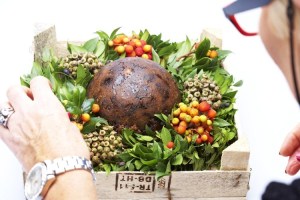
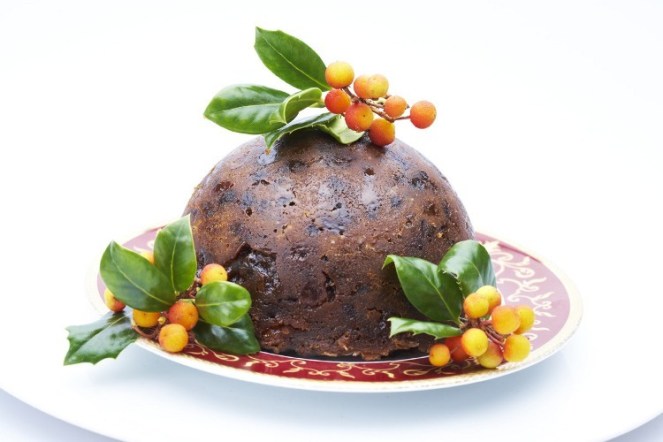
Here’s a great recipe for your Christmas puddings this year. Today is Stir It Up Sunday and the day to be making the puds.
Traditionally, the preparation of Christmas puddings began on Stir-up Sundayan informal term in Anglican churches for the last Sunday before the season of Advent.
I made this whilst on a photoshoot with the great chef Martin Blunos, when he was an ambassador for Buckfast Tonic Wine. Martin is a wonderful chef and we had a blast with Barry Mellor, a food photographer who really knows his business.
Martin says that Buckfast Tonic Wine is an ideal ingredient to include in the recipe and I have to agree. It is rich and sweet and has flavours that complement the seasonal dish.
Enjoy making!
Ingredients: 180ml Buckfast Tonic Wine
115gr sultanas
115gr raisins
285gr currants
25gr mixed peel, finely chopped
25gr glace cherries, halved
25gr almonds, chopped
1 small apple, peeled, cored and grated
1/2 lemon, zest microplaned
1/2 orange, zest microplaned
110gr shredded suet
60gr self raising flour
110gr white bread crumbs (from a day old loaf)
¼ tsp ground cinnamon
¼ tsp grated nutmeg
½ tsp mixed spice
225gr soft brown sugar
2 medium eggs
. pinch of salt
Makes 1 x 1.2 litre or 2 x 570ml puddings in basins
Method:
Place all of the dried fruits into a bowl and pour the Buckfast over – cover well and leave for a couple of days in the fridge.
Strain the soaked fruits, keeping the Buckfast.
In another (large) bowl mix the suet, flour, breadcrumbs, sugar, spices and salt – mix well.
Then mix in the zests, peel, nuts, apple and finally the drained soaked fruits.
In another bowl beat the eggs with the reserved Buckfast pour all over the dry mixture and stir – this is a big job to do so you can cheat by using a machine, but as its Christmas everyone in the family should give the pudding mix a stir for good luck – the mix should be a dropping consistency if it’s a touch dry add a little more Buckfast.
Cover bowl with cling film and put in the fridge overnight for the flavours to develop.
Grease your chosen (size) pudding basin with plenty of unsalted butter.
Pack in the mixture and level off evenly, cover with a circle of greaseproof paper then a pleated piece of tin foil sealing around the rim of the basin/s well.
Steam pudding/s for 8 hours minimum, check from time to time that the pan you’re steaming in doesn’t boil dry!
When done – cool and store (best made in late October/November)
When needed steam for 2 hours and serve with a drizzle of Buckfast over the top of the piping hot pudding and a good dollop of clotted cream.
Handsome young chef Zach Docherty is feeling the heat. Following an exposé in a national newspaper, his fiancée Poppy Dunlop has broken their engagement. Heartbroken at the thought of life without Poppy, Zach drowns his sorrows and, when his agent suggests that Zach becomes a contestant in a reality TV show, Jungle Survival, he reluctantly agrees. Plunged deep in the jungle, into a bizarre mix of talent and trials, Zach meets glamour model Cleo Petra, and the cameras go crazy. Will Zach survive and be crowned Jungle King? Or will his latest exploits push Poppy further away…
Extract:
Celebrity Chef and TV game show contestant, Zach, appears to be struggling in the Jungle…
“Would you believe it?” Hattie was aghast. “He’s only bleedin’ raised his hand before the first grub has even landed!” She sat with Jo and stared in horror as Mac…
The blurb also tells me that this book and accompanying cookery series is an, “Entertaining journey of an Englishman struggling with the ups and downs of living in rural Italy.”
I was hesitant to read something with a title that suggests a gloomy outcome but having spent time in the area of Italy so lovingly described, I was curious and decided to plough on. I am so pleased that I did.
Stephen Phelps gave up a successful career in television, to make a TV cookery series in Tuscany, a region of Italy that he had come to love. His partner, Tam, can’t cook but inspired by neighbour Lia, a great cook, he is persuaded to embark on a six-part series. The book that followed and the series, A Recipe For Disaster outlines their many encounters with the real Italy – a world away from the picture-book ideal of summer holidays in Tuscany. I was keen to throw some questions to Stephen and learn about his experience…
Stephen Phelps
Stephen, welcome to my blog. I adored your book but the title of your book seems an ominous premonition of things to come, did you chose the title before or after filming and writing and why?
I chose the title after making the series and just before completing the book. It was originally to be called MY BIG ITALIAN IDEA, and I think you can still find traces of that in the text. It starts for instance with the notion that our neighbour Lia was trying to sell us on a “Big Idea.”
Other than the 30-degree heat in August what was the most difficult thing you experienced during filming?
That’s easy, the lack of a fully-trained and properly equipped support crew. As exemplified by the problems we faced when we came to record the sound during filming in the tight confines of the kitchen. Here’s a clip from the book about that particular problem:
Now here’s something else you can’t get in a small country town in Italy at a moment’s notice – a boom. Professional sound recordists use a specially designed telescopic arm that allows them to get their microphone into the best possible position without getting in the shot. Sometimes they can be twelve or fifteen feet away and still get a microphone close enough to pick up a whisper. And somehow, by magic, they seem to know just exactly how close they can get without their fluffy grey windsock peeking into shot. … We didn’t have a windsock (of course), nor did we have a “specially designed telescopic arm”. So we had to improvise. Fifteen minutes later we were ready. The arc lights were switched on and I swung my “boom” into position. The microphone was now attached to the end of a broom handle with a red and white striped towel wrapped around it to act as a windsock. This was the Dunkirk spirit in action.
What is Tam’s favourite recipe and why?
Her favourite recipe from the series is the Simple Onion Soup, because a) it’s the one she could really cook on her own, and b) it’s Simple! But there’s one dish that I cook occasionally that she absolutely loves – chicken breasts wrapped in pancetta, drizzled with balsamic vinegar (the real, expensive, stuff) and honey, then baked in the oven for 20 minutes. Always guarantees me a compliment about my cooking.
I tried the Simple Onion Soup recipe and it is absolutely delicious! But moving on, would you recommend self-financing to other would-be film-makers?
Not unless they can’t avoid it. The pros are many. You are your own boss, and you can decide exactly what you want to do. If you get money from a broadcaster they will Inevitably be very prescriptive about how they want the series made. There’s more good news in that you hang on to all the rights to the show. But the bad news is that you have to find the way to get it out into the marketplace and then you have to do all the marketing yourself. Having said that, there are mechanisms like Quiver Digital now available for getting self-financed programme out there. Make no mistake though, filming the series is the easy bit!
Was it difficult to stick to budget and why?
In truth we had no actual budget. We just started, paying for things as and when they came up. Then, as it became apparent that we were actually going to get the material for a proper series, we began to encounter real outside costs like the editing of the series. And that’s when we had to be very sure that we were going to get something saleable at the end of it – otherwise it would have been money down the drain.
Have you any advice to would-be, self-financing film-makers?
Don’t do it! Unless and until you cannot find a proper outlet for the kind of work you really want to do. And be very sure that you have a clear marketing strategy in place before you start on this road.
What was the best bit about making a cookery series other than tasting the delicious recipes?
Travelling around and meeting the local farmers, the people who make the cheese and salami and so on.
What is the reaction of your friends and neighbours in Le Marche by this project?
Very positive. So far. After the recent earthquakes the region needs a boost to its tourism prospects and I think they see this as very helpful in that respect. Most of the neighbours don’t speak any English though – so I could be saying anything about them. But they trust me, thank goodness!
Will you make more episodes and if so, what would the content be?
Yes, but only if this series really takes off and delivers some financial return. We shot this first series in high summer, and we always had a vague plan to do a series for each of the four seasons. The seasons here are markedly different, and so is the food that gets eaten. Chestnuts are really plentiful and delicious right now for instance.
Do you think online viewing with content by independents is here to stay and a good way to market a series? Please explain your thoughts.
I would like to think so. But whether it will be in the form of “conventional” series like COOKUCINA or through much shorter clips of the sort that populate YouTube is another question. We did think for a while of producing a series of Cookucina shorts for YouTube – but maybe that is for another day. The real issue is where does the money come from. Traditional TV costs a great deal of money to make (often upwards of $50,000 an hour). It’s by no means clear what future, online, financial model will generate the funds to support those kind of production values. It’s what we have tried to do with Cookucina, but so far we are well out of pocket. The good news, though, is that it can stay on sale for ever, and with the right promotion maybe its time will come!
Your writing is very eloquent and makes great reading. (Thank you for that, Caroline!) Did you do an MA in creative writing to assist in script writing or have you found it has helped in other areas?
I thought I was going to make a living as a TV dramatist, but in fact I have written a lot of radio drama for the BBC, but no TV. I have three full-length screenplays waiting to be discovered, and I do have to say that the scriptwriting training taught me a lot about how to structure when I sat down to write my first book.
What’s next for Stephen Phelps?
No idea! I am a great one for just picking up the next thing that comes along and running with it. Having said that, I have just started on a rather difficult novel (my first). I’d like to think I have a good novel in me – but then don’t we all?
Thanks for joining me on my blog and good luck with your venture.




 Jungle Rock – A romantic comedy novella
 Celebrity Chef and TV game show contestant, Zach, appears to be struggling in the Jungle…


 Caroline James Author